
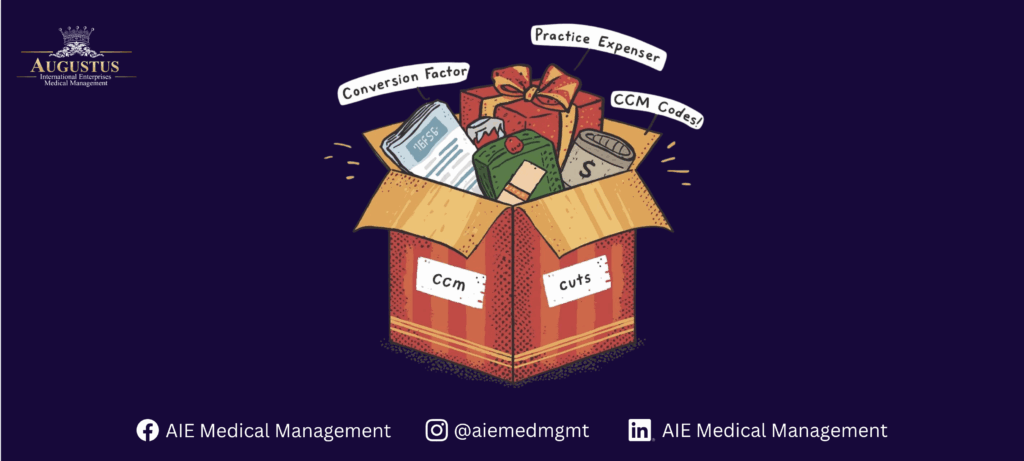
The Opening Gift: How the Fee Schedule Works (and Why It Feels Like Secret Santa)
Imagine the anticipation every fall: CMS, Congress, medical specialty societies, and every practice across the country are prepping for the big reveal—the Medicare Physician Fee Schedule (MPFS) for the next year. But this isn’t just opening presents. It’s a carefully orchestrated, and sometimes chaotic, process with a cast of thousands.
Each spring and summer, CMS works with specialty societies (through the AMA’s “RUC”—Relative Value Scale Update Committee), reviews cost and utilization data, and consults a chorus of economists and clinicians. Proposals are wrapped up in dense policy language (the “proposed rule”) and sent out for a public comment period—like a sneak preview where everyone gets to shake the box. Practitioners, professional associations, patient groups, and even individual providers can comment, suggest tweaks, or sound the alarm if CMS is unwittingly stuffing coal in too many stockings.kff+4
By Halloween (statutory deadline!), CMS must finalize the rule. The result: a massive “gift bag” of tweaks, new codes, payment changes, and documentation rules that influence how more than $100 billion in services are paid for every year. That’s why your input matters—each year, those comments help shape what ends up under the tree (or snuck into the fine print).
The Good: Unexpected Goodies
Conversion Factor Bump—A Rare Bonus Check
For 2026, the conversion factor gets a surprise boost: 3.77% for qualifying APM participants ($33.57) and 3.26% for everyone else ($33.40), thanks in part to last-minute Congressional action. This is the first real “bonus” since before the pandemic.
How to make the most of it:
- Audit your code mix for high-frequency services where the bonus will matter most.
- Update revenue projections, but don’t overspend—this bump is one-time only.acc+3
- Communicate to your team that this relief may not return next year.
Primary Care’s Preferred Stocking
Chronic care management, team-based care, and new codes for non-face-to-face and care coordination are all getting a makeover. The aim: reward practices that focus on preventive medicine, not just episodic sick care.
How to unwrap the value:
- Integrate chronic care management (CCM) and team visits into your workflows—these are now more reliably paid.cms+2
- Leverage EMR templates for better documentation and maximal reimbursement.
- Educate patients about expanded preventive services—this builds loyalty and qualifying encounters.
Practice Expense Overhaul—A Fresh Take for Office-Based Practices
For office-based docs, CMS increased the indirect cost allowance, reflecting the true overhead for self-owned clinics.
Your next steps:
- Review lease, staffing, and supplies to ensure expenses are being accurately captured.
- Benchmark overhead now versus last year to identify gains tied to the new formula.
- If you’re facility-based, explore shifting more visits to office settings when possible for better reimbursement.
The Bad: The Socks and Sweaters
Efficiency Adjustment—The Lump of Coal for Specialties
Proceduralists, radiologists, and other specialists get hit with a -2.5% “efficiency adjustment” on thousands of non-time-based codes. CMS’s goal: rebalance payment between specialties and primary care, arguing that technology and workflow improvements justify the cut. Unfortunately, this adjustment can erase the sweet taste of the conversion bump for many.
How to cope (and maybe thrive!):
- Rebalance service offerings to include more time-based and care management codes where possible.
- Review documentation to bulletproof high-yield encounters from downcoding.
- Advocate through specialty groups for reconsideration in next year’s rulemaking; your voice and data matter.
Specialist Squeeze—The “Regift” Nobody Wants
Hospital-based, procedural, and high-volume specialties are caught between rising costs and lower reimbursement. The 2026 shift continues a multi-year trend as CMS reallocates funding toward primary care and value-based models.
Three survival tips:
- Coordinate with hospital admin on impact—adjust staffing and service lines as needed.
- Consider alternative payment models or bundled services to diversify revenue.
- Don’t neglect advocacy—comment on future rules whenever possible and share your real-world experience with rulemakers.
The Ugly: The Gift Card with the Fine Print
New Rules, More Documentation
CMS attaches new compliance strings to almost every “gift,” and the grace period for new codes gets shorter every year. This means more time in the EHR and less at the holiday party.
How to keep your workflow festive:
- Invest in coder and biller training sessions to prevent denials.
- Automate documentation wherever possible with smart templates and checklists.
- Schedule regular compliance reviews—catch errors before audits find them.
Telehealth Tweaks—Is the Zoom Call Still a Present?
While some telehealth codes remain, others lose eligibility in 2026. Behavioral health and certain rural/office-based codes stay covered, but remote E/M from home may no longer billable.
Stay connected:
- Double-check your billable codes for 2026—don’t assume last year’s telehealth list applies.
- If you invested in telehealth, maximize use for eligible encounter types (especially behavioral health).
- Communicate with patients about in-person versus virtual visit options.
Specialty Pilots—Mandatory “Ambulatory Models” Coming Soon
Certain specialties (e.g., cardiology, ortho, neuro) will participate in new CMS ambulatory pilots with risk and accountability for outcomes in chronic heart failure or back pain.
Prepare for the new models:
- Join pilot planning committees early for input and to design optimal workflows.
- Monitor CMS updates for timeline and reporting requirements.
- Train clinicians on value-based metrics and care management integration.
Wrap-Up: The Opportunity in Every Gift Bag
Like any thoughtful celebration, the Medicare Physician Fee Schedule is equal parts surprise, sentimentality, and mystery. Yes, there will be changes you love, some you exchange, and a few you quietly stuff in the closet. But each “gift” offers a new way to adapt, grow, and—above all—advocate.
Suggestions for every practice this year:
- Hold an end-of-year “unwrapping” meeting: Go line by line through the new schedule with your billers, coders, and admin.
- Assign advocacy champions: Make sure your specialty society hears your feedback for 2027.
- Keep gift receipts: Track changes, denials, and new opportunities—you’ll be ready when it’s time to re-gift a regulation or show CMS why a present just doesn’t fit.
At the end of the day, your willingness to adapt—and to speak up—shapes what CMS might put under the tree next year. Here’s hoping your 2026 brings more cheer than coal, and that your practice finds value (and a little joy) in every regulatory surprise.